
In 2026, it’s not optional — it’s the core of how brands grow.
Table of Contents
Types of Digital Marketing
- SEO
- Content Marketing
- PPC
- Social Media
- Email Marketing
- Affiliate Marketing
- Influencer Marketing
- Video Marketing
- More services
Each serves a different stage of the customer journey — from awareness to conversion.
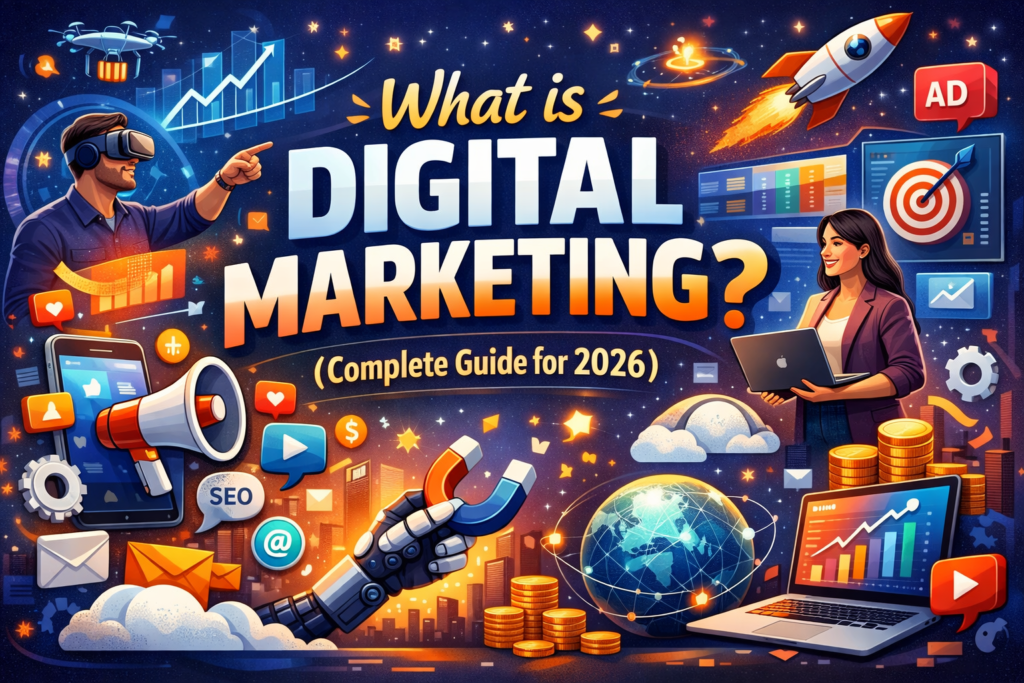
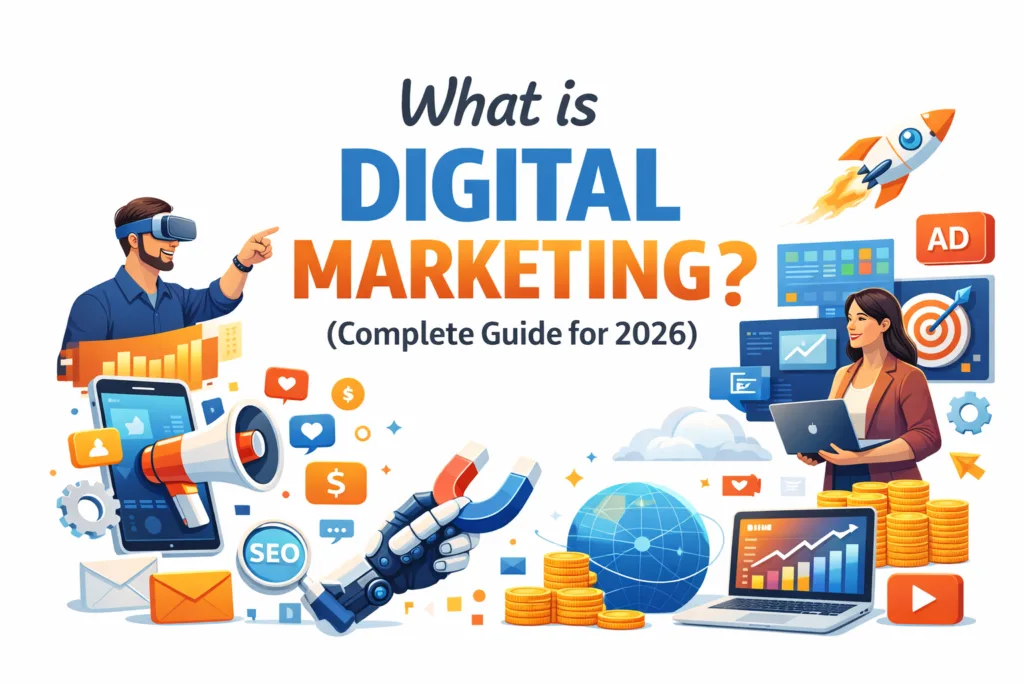
What is Digital Marketing? (The Ultimate Complete Guide for 2026)
How Digital Marketing Works
It works by targeting the right person, with the right message, at the right time. A business sets a goal (brand awareness, leads, sales), chooses channels (Google, Instagram, email), creates content or ads, runs campaigns, and tracks performance through analytics tools. Data then informs what to improve — creating a continuous loop of test, learn, and optimise.
To make this process effective, marketers first identify their target audience by analyzing demographics, interests, and online behavior. This helps in creating personalized and relevant content that resonates with potential customers. Search engine optimization (SEO) ensures that content appears in search results, while paid advertising (PPC) helps reach users faster through targeted ads. Social media platforms allow brands to engage directly with their audience, building trust and relationships over time.
Additionally, email marketing helps nurture leads by delivering valuable information and offers directly to users’ inboxes. Automation tools streamline repetitive tasks, making campaigns more efficient. By continuously monitoring key metrics like traffic, engagement, and conversions, businesses can refine their strategies and achieve better results over time.
Benefits of Digital Marketing
- Cost-effective — even small budgets can drive significant results compared to TV or print.
- Measurable — track clicks, conversions, and ROI in real time.
- Targeted — reach specific demographics, interests, and behaviours.
- Global reach — sell to anyone, anywhere, 24/7.
- Personalised — tailor messages for individual users at scale.
Importance of Digital Marketing in 2026
With over 5.5 billion internet users globally, digital channels are where attention lives. In 2026, AI-driven personalisation, voice search, short-form video, and zero-click search results have reshaped the landscape. Businesses that invest in digital marketing don’t just compete — they lead. Those who ignore it become invisible.
Key Skills Required
- SEO and keyword research
- Data analytics (Google Analytics 4, Looker Studio)
- Copywriting and content strategy
- Paid advertising (Google Ads, Meta Ads)
- Social media management
- Email marketing automation
- AI tool literacy (prompt writing, AI content tools)
Common Strategies
The most effective strategies combine inbound and outbound approaches. SEO + content marketing builds long-term organic traffic. Paid ads drive immediate visibility. Email nurtures leads. Social media builds brand trust. In 2026, AI-assisted content creation and hyper-personalisation are becoming standard parts of every serious strategy.
Businesses are also focusing on video marketing, influencer collaborations, and voice search optimisation to stay competitive. Data-driven decision-making plays a key role, allowing marketers to refine campaigns based on user behavior and performance insights. A well-balanced strategy ensures both short-term gains and sustainable long-term growth.
Challenges in Digital Marketing
- Algorithm changes — platforms update constantly, impacting reach overnight.
- Content saturation — cutting through the noise demands quality, not just volume.
- Privacy regulations — GDPR and cookie deprecation have changed data collection.
- Ad fatigue — users increasingly ignore or block ads.
- Keeping up with AI — rapid tool evolution requires continuous learning. (Read more..)
Conclusion
2026 is no longer just a tool — it’s the engine of modern business growth. Whether you’re a brand, freelancer, or entrepreneur, understanding and applying it gives you a measurable edge. Start small, stay data-driven, keep learning, and scale what works.